 ABAS
ABAS1925
The year was 1925. AB Radiotjänst had begun broadcasting radio, and the Social Democrats’ first Prime Minister, Hjalmar Branting, had passed away. It was the Roaring Twenties, and prosperity and enthusiasm prevailed, which also led to conflicts such as strikes at mines and power plants. Business was generally characterized by workshop conflict, and the Swedish Employers’ Association implemented a lockout against Swedish workers. Popular culture was dominated by Greta Garbo, Charlie Chaplin, and crossword puzzles. For the industry, devastating mass emigration to America continued to characterize the era, but gradually began to subside.
It was at this time that Gottfrid Svensson established a fence factory in Hunnabo in Tranemo, where woven wire mesh with square meshes from ten to one hundred millimeters was manufactured from prime galvanized iron wire. The price per square meter for 50-mesh netting in three millimeters thickness then commanded 1.24 kronor, corresponding to a gross price of 32.02 kronor in today’s monetary value. The local business community otherwise consisted mostly of manual forestry and horse-powered agriculture, but automation had begun.
1929
In 1929, the global depression broke out in full bloom. In Sweden, unemployment rose, and the conditions for entrepreneurship deteriorated drastically. Factory owner Erling Wendefors from Borås took over the fence factory at this time, and relocated it to Annedal. Turnover was a modest 10,000 kronor per year, which does not correspond to more than a few hundred fence rolls.
1937
By 1937, the economy had begun to recover from the prolonged recession. Wendefors was able to expand the business by moving to more spacious premises to handle greater demand. Social advances such as child allowance, free childbirth, maternity allowance, and child health centers were implemented in the gradually expanded welfare program. In the world around, however, dark forces were emerging: Adolf Hitler declared his intention to wage war, and was visited by Benito Mussolini, while Japan invaded China and recognized Francisco Franco’s Spanish military dictatorship.
When the war broke out, Swedish men were mobilized, and the business community suffered a sharp decline in manpower. Fence netting was still woven, but mainly as homework. During the war years, the netting was transported by horse and cart to the railway station in Ambjörnarp for further transport. Rationing and a coalition government characterized Sweden during the war years.

1949
In 1949, the business was moved entirely to a new factory in Ambjörnarp, to take advantage of the railway. AB Ambjörnarps stängselfabrik, or ABAS, was thus established. The workforce amounted to eight employees. Good times were once again on the horizon, rationing of meat, sugar, soap and detergents ceased, and pastries could once again be sold in stores. Labor immigration from Yugoslavia, Turkey and Italy strengthened the labor market as industry sought personnel. The Soviet Union detonated its first nuclear charge, and the Cold War began. Mao Zedong seized power in China.
1964
The post-war period constituted a long upswing for Swedish business in general, and so also for ABAS. In 1964, the baton was taken over by Sten, Alf and Erik Strömqvist. The Beatles had their international breakthrough, the Christian Democratic Assembly was formed, and Volvo’s new factory in Torslanda was inaugurated.

1970
The boom would last until the mid-1970s, when zero growth and structural transformation came to characterize the economy. The shipbuilding and textile industries collapsed, and many heavy industrial companies were nationalized, while the krona was devalued in rounds to strengthen competitiveness. The oil crises led to rationing and cost explosions, and Swedish nuclear power experienced an upswing. At the same time, the environmental movement gradually strengthened its grip on public opinion.
The Strömqvist family continued to run the company for a long time, which in 1980 was taken over by Göran. The first automatic machine for fence netting was inaugurated the following year, and ABAS thus took the first step in a new direction. The long-standing Social Democratic power had recently been broken, and the labor market was characterized by chaotic strikes, while a boom was raging.
1980
Modern globalization and economic liberalization began at this time under the leadership of primarily Ronald Reagan and Margaret Thatcher. China opened up to the outside world and began reforms, while Japan enjoyed continued miracle growth. A radicalization had begun in the Middle East. The personal computer made its entry and revolutionized the workplace. Madonna, Michael Jackson and Whitney Houston were some popular artists, along with a number of glam and hard rockers.
In the late 1980s, ABAS broadened its field of operations with the manufacture of gates and fence posts, and thus complete area protection became a new core business. The factory was expanded in 1988 with a warehouse and a welding department, and in 1990 a welding robot was put into operation. The Cold War ended when the Soviet Union dissolved and the two German states were reunited. Iran and Iraq made peace, but Iraq instead invaded Kuwait, and thus began the international upheaval we are still experiencing the aftermath of.
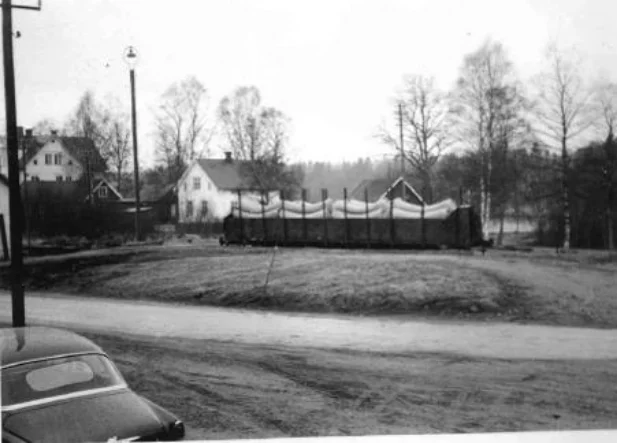
1990
Financial and banking crises were followed in the early 1990s by a real estate crisis, and the krona was allowed to float freely. Sweden joined the European Union, which facilitated trade. However, Sweden said no to membership in the monetary union. The new millennium would later begin with the IT bubble and a fixed link across the Öresund.
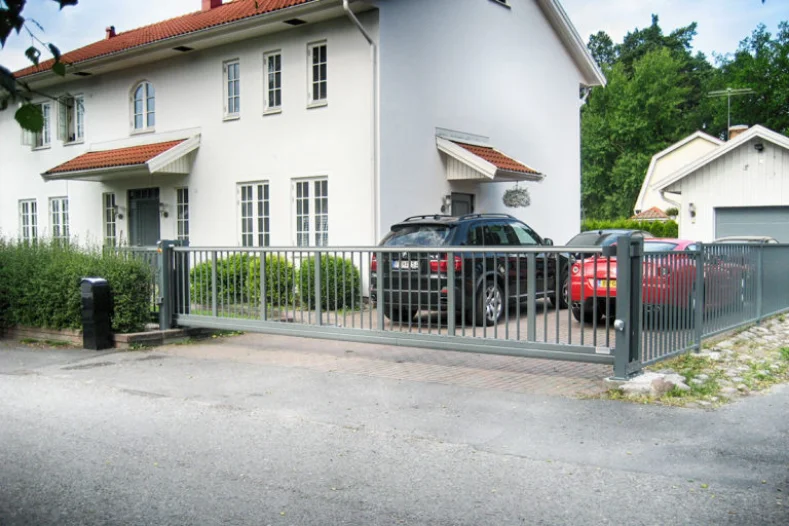
2005
In 2005, the factory at ABAS received its current main design, with an extension and renovation of office premises. In 2008, the business expanded further, when a new factory for the manufacture of automatic gates was established in Svenljunga. The business was thus divided into two divisions, now under the name ABAS Protect.
Göran Strömqvist sold the company to Mats Lanned in the same year. At the same time, the industry was characterized by a sharp consolidation, and competition intensified. ABAS experienced a tumultuous period, and lost market share in the price war that broke out.

2010
In 2010, ABAS was acquired by Niclas Johansson, who initiated a comprehensive structural transformation. The business is once again fully concentrated in Ambjörnarp, and costs are cut at every stage through strategic purchasing, process simplification and systematic analysis of the production chain. After a couple of tough years, the trend reverses, and ABAS experiences strong growth and increasing profit margins, with the aim of further expansion, product development and modernization of the machinery.

